Alexander Straus-Fausto on Giving the Organ a Voice of Its Own
From a theatre organ in Montreal to the Skinner at Trinity Cathedral in Miami, an organist on color, transcription, and why the organ is not an instrument of the past
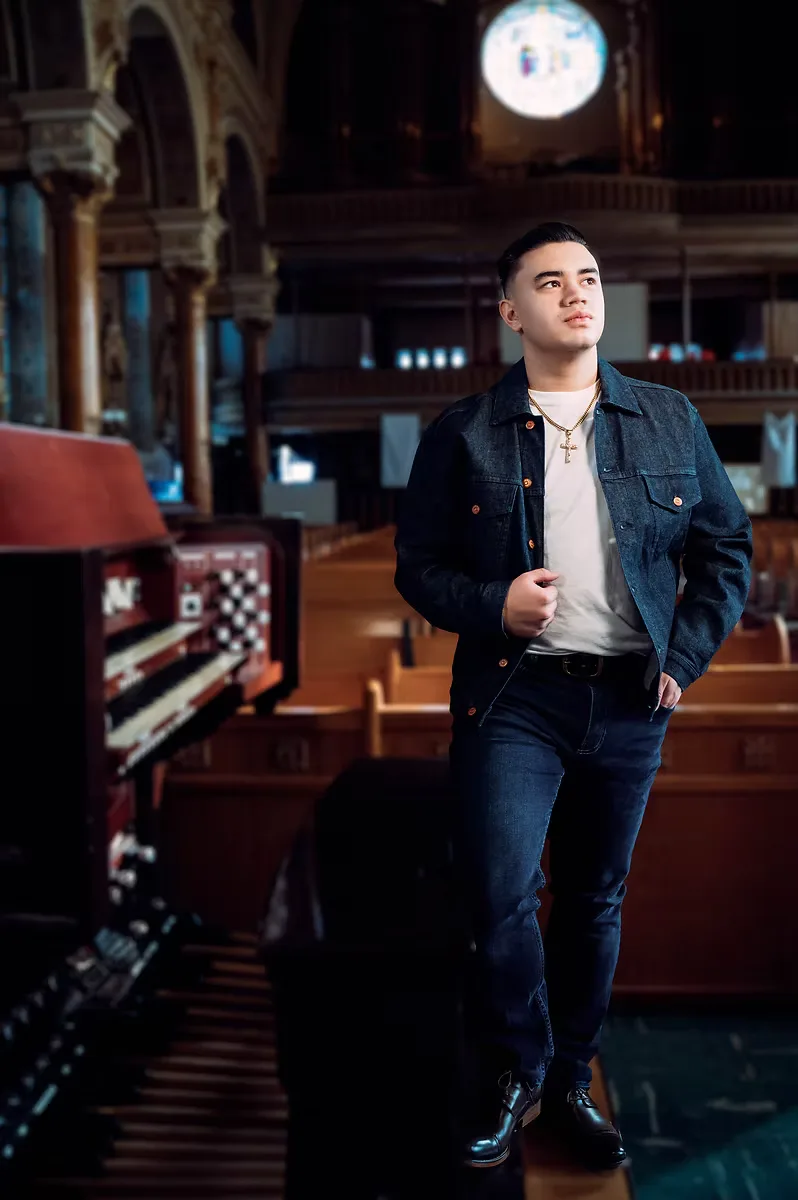
Welcome to Classically Minded! I'm Garrett John Law, curator, and today I'm introducing Alexander Straus-Fausto.
Alex is Cathedral Organist and Associate Director of Music at Trinity Cathedral in Miami, where he is the custodian of a 1924 Skinner organ. At nineteen he became titular organist of L'église du Très-Saint-Nom-de-Jésus in Montréal, and he has since played in venues including Westminster Abbey, St. Paul's Cathedral in London, La Madeleine in Paris, and Grace Cathedral in San Francisco. He was named to The Diapason's 20 Under 30 class of 2023 and to the CBC's Top 30 Under 30 in 2025, and this season he gives two solo recitals at the Bergen International Organ Festival.
His first organ was a theatre organ, and it shows. He has created more than fifty concert transcriptions of orchestral and operatic works, and he wants listeners to hear how colorful the organ can be.
Let's hear from Alex!
The organ, and finding a voice
1. How did you come to the organ, and what drew you to sacred music in particular?
I have always been captivated by the sound of the organ, but what truly fascinated me when I first had a hands-on experience with the instrument was its extraordinary variety of tonal colours and seemingly limitless expressive possibilities. I cannot think of another instrument that offers a creative individual such an extensive palette with which to express their artistic imagination.
Interestingly, the first organ I ever played was a theatre organ. I was initially drawn to its orchestral qualities, its variety of options, versatility, and the tremendous freedom it afforded the performer. My introduction to the instrument was therefore somewhat unconventional. Sacred music was not initially what attracted me to the organ, as my early impressions of church organ playing were that it could sometimes be rather rigid and predictable. Part of my artistic mission today is to challenge that perception.
I want people to discover just how exciting, expressive, colourful, and emotionally compelling the organ can be. I believe that an organist should bring a distinct artistic personality to the instrument. The sound of an organ should not necessarily be the same from one performer to the next; rather, it should reflect the imagination, individuality, and musical convictions of whoever is sitting at the console.
As I became more immersed in sacred music, particularly the English cathedral tradition, I discovered an extraordinary opportunity to bring that same orchestral imagination into the liturgy. The ability to illuminate a sacred text through registration, harmony, phrasing, and colour is immensely rewarding.
Ultimately, I am not interested in simply reproducing what has been done before. I want to develop a recognisable artistic voice while revealing the unique tonal personality of every instrument I encounter.
The sound of an organ should not necessarily be the same from one performer to the next.
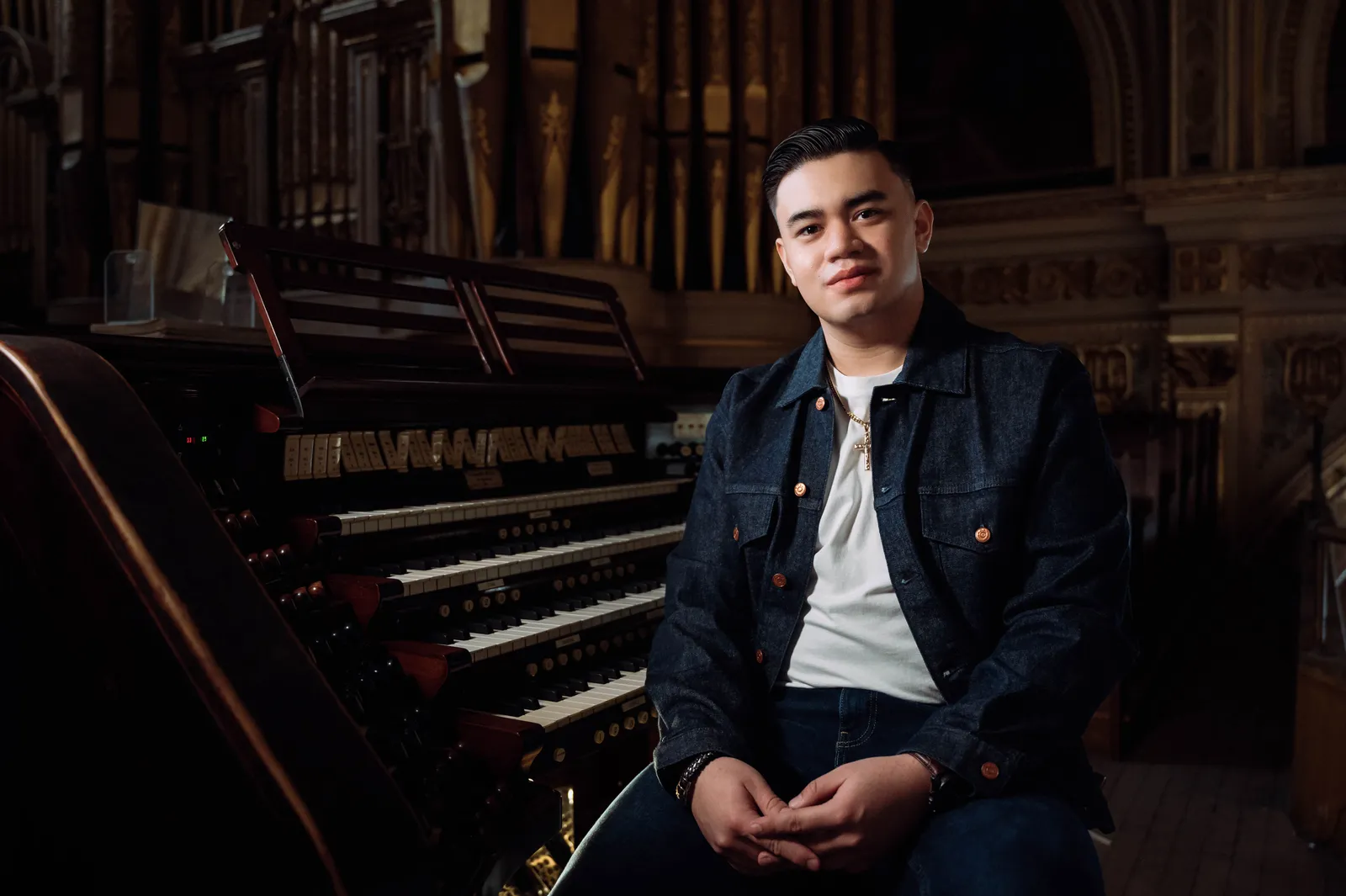
2. You’ve held posts in Montreal, Kingston, and Miami. What has each place taught you?
In every city where I have lived and worked, I have made a conscious effort to understand its musical heritage, cultural identity, and ecclesiastical traditions.
Montreal taught me the importance of historical tradition. It is a city with an extraordinarily rich organ culture, deeply connected to its French and Catholic heritage. Its magnificent churches, remarkable architecture, and extensive collection of instruments provide an exceptional environment for an organist. Although aspects of its sacred musical heritage, including Gregorian chant, have gradually diminished since the Second Vatican Council, there are many dedicated musicians working to preserve and revitalise these traditions. Dr. Isabelle Demers at McGill University is also doing excellent work in preparing a new generation of organists to navigate an evolving musical landscape. Also, Juget-Sinclair, a relatively new organ company in Montreal, is actively building some of the finest new tracker organs I have ever seen, played or heard, and establishing themselves as one of the world’s leading new high-end tracker builders of our generation.
When my family moved to Kingston in 2024, I became further immersed in the Anglican cathedral tradition through St. George’s Cathedral. Kingston is now the place I consider home in Canada, and it was there that I increasingly discovered my identity as a church organist, especially given that I already graduated from Yale then. The music of Herbert Howells, Edward Bairstow, Charles Villiers Stanford, Herbert Sumsion, and their contemporaries speaks very naturally to my musical sensibilities. Their treatment of the organ as an orchestral and expressive partner to the choir is something I find particularly compelling. Accompanying this repertoire is among the most fulfilling aspects of my work.
When I first arrived in Miami, I immediately recognised certain parallels with Montreal. Both are cosmopolitan, multilingual cities with distinctive cultural identities. Miami, however, has a very different musical and ecclesiastical landscape, shaped profoundly by its Cuban, Caribbean, and wider Latin American communities.
While Montreal benefits from centuries of established European sacred musical traditions, Miami presents an exciting opportunity to cultivate and develop those traditions within a younger and rapidly evolving cultural environment.
Rather than viewing this as a limitation, I see it as an extraordinary opportunity. Miami is becoming an increasingly important international cultural centre, and I believe there is enormous potential to establish a cathedral music programme that contributes meaningfully to the city’s artistic identity while engaging with the diverse communities that make Miami so distinctive.
Trinity Cathedral, Miami
3. What are you hoping to build at Trinity, musically and with the community?
My ambition from the outset has been to establish Trinity Episcopal Cathedral as a centre of musical excellence, both within the Episcopal Church and within the wider cultural life of Miami.
On a liturgical level, I am particularly interested in bringing imagination and sensitivity to the musical experience of worship. Whether through arranging accompaniments, reharmonization, or using contrasting registrations to illuminate the text of individual hymn verses, I want the organ to contribute meaningfully to the expression of the liturgy. We are exceptionally fortunate to possess a magnificent Skinner organ that makes these possibilities virtually endless.
Having initially assumed the role of Director of Music, I recognised the tremendous potential for developing Trinity’s choral programme further. I was therefore delighted to bring Dr. Matthew Brady, Director of Choral Studies at the University of Miami’s Frost School of Music, into the Cathedral’s musical leadership.
Beginning on the First Sunday of Advent, November 29, 2026, Dr. Brady will assume the position of Director of Music, and I will continue as Organist and Associate Director of Music. I am enormously excited about this collaboration. His expertise, artistic leadership, and connections to Miami’s choral community will be invaluable as we work together to establish a professional cathedral choir of exceptional distinction.
We are also extremely fortunate to have the leadership of Fr. Jason Roberson, whose vision and enthusiasm for the Cathedral’s future have made these developments possible. There is a genuine shared ambition to establish Trinity as a destination for outstanding sacred music.
Our aspirations extend well beyond Sunday worship. We hope to undertake professional recordings, commission new compositions, present major choral and orchestral works, and develop a vibrant concert programme that welcomes audiences from across South Florida.
I am particularly pleased to be presenting an organ recital series this coming spring, running from February 26 to April 16, in addition to giving regular performances myself. Since arriving in Miami, I have also had the privilege of collaborating with prominent Latin Grammy Award-winning musicians who have approached me through both the Cathedral’s standing in the city’s musical life and the professional relationships I have established here. These collaborations offer exciting opportunities to bridge musical traditions and introduce the organ to new and diverse audiences.
I will also be presenting organ demonstrations during Miami Art Week, coinciding with Art Basel Miami Beach. Trinity is exceptionally well positioned to participate in this internationally celebrated cultural event, given its location along Biscayne Bay, its proximity to major artistic activities, and the neighbouring Marriott hotel, which welcomes many international visitors during the week.
The Cathedral’s remarkable waterfront setting, magnificent architecture, and extraordinary Skinner organ give it a unique identity within Miami’s cultural landscape. I see tremendous potential for Trinity to become not only a centre of excellence in sacred music, but also a significant artistic destination in its own right, welcoming musicians, artists, and audiences from around the world.
Ultimately, we want Trinity to become a place where musical excellence, spiritual life, and community engagement complement one another: a place where people, regardless of their religious or musical background, can encounter something genuinely extraordinary.
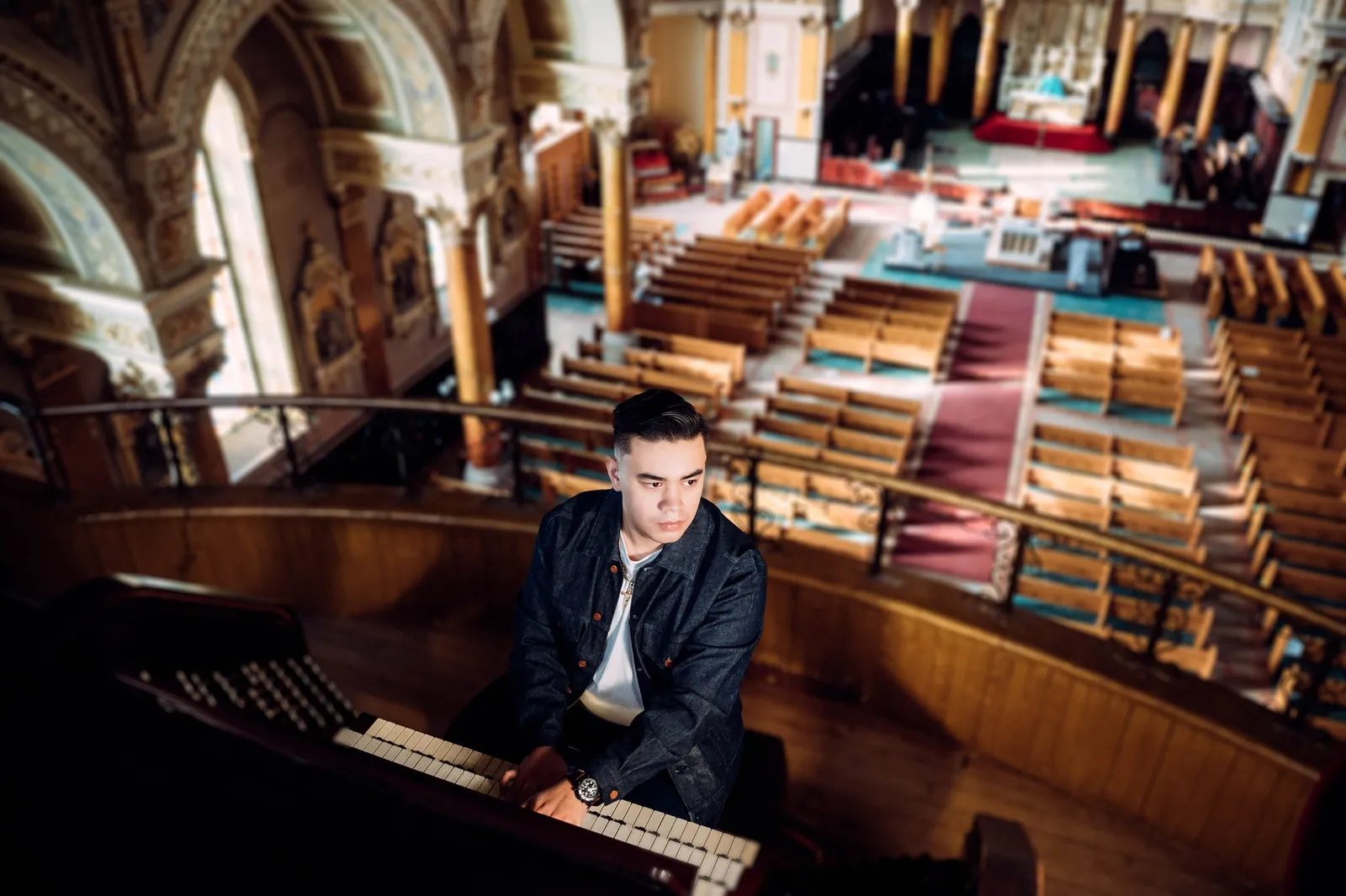
4. Trinity’s 1924 Skinner is a remarkable instrument. What is it like to play and plan for?
It is an absolute dream to play and, without question, one of my personal favourite instruments.
I have a particular affinity for the American symphonic organ tradition, and Trinity’s Skinner possesses many of the qualities that make Ernest M. Skinner’s instruments so extraordinary. The solo strings are among the most beautiful Skinner strings I have encountered. The Great Claribel Flute, Diapasons, and the surviving Skinner voices of the Swell and Choir division possess an exceptional warmth, refinement, and expressive character.
What makes the experience even more remarkable is the Cathedral’s acoustic. There is a wonderful marriage between the instrument and the building, allowing the organ’s individual colours to emerge with remarkable clarity while retaining an enveloping orchestral richness.
I genuinely believe that Trinity’s organ is one of the great underrated treasures of American organ building. It deserves to be much more widely recognised.
One of my long-term aspirations is to see the installation of a new console that would serve the instrument’s artistic and mechanical needs while resembling a well-crafted Skinner console. I would particularly favour an entirely pipe-based instrument without digital augmentation. The organ already possesses such a wealth of authentic tonal resources that I believe its greatest strength lies in preserving and celebrating its own distinctive voice.
The instrument also has a fascinating performance history, having been played by such distinguished figures as Marcel Dupré, Jean Langlais, and Virgil Fox. Dupré himself gave two recitals at Trinity.
There is something particularly inspiring about playing an instrument with such a distinguished heritage while considering what its next century might hold. I feel extraordinarily privileged to be its custodian and to have the opportunity to introduce new audiences to its remarkable sound.
I genuinely believe that Trinity’s organ is one of the great underrated treasures of American organ building.
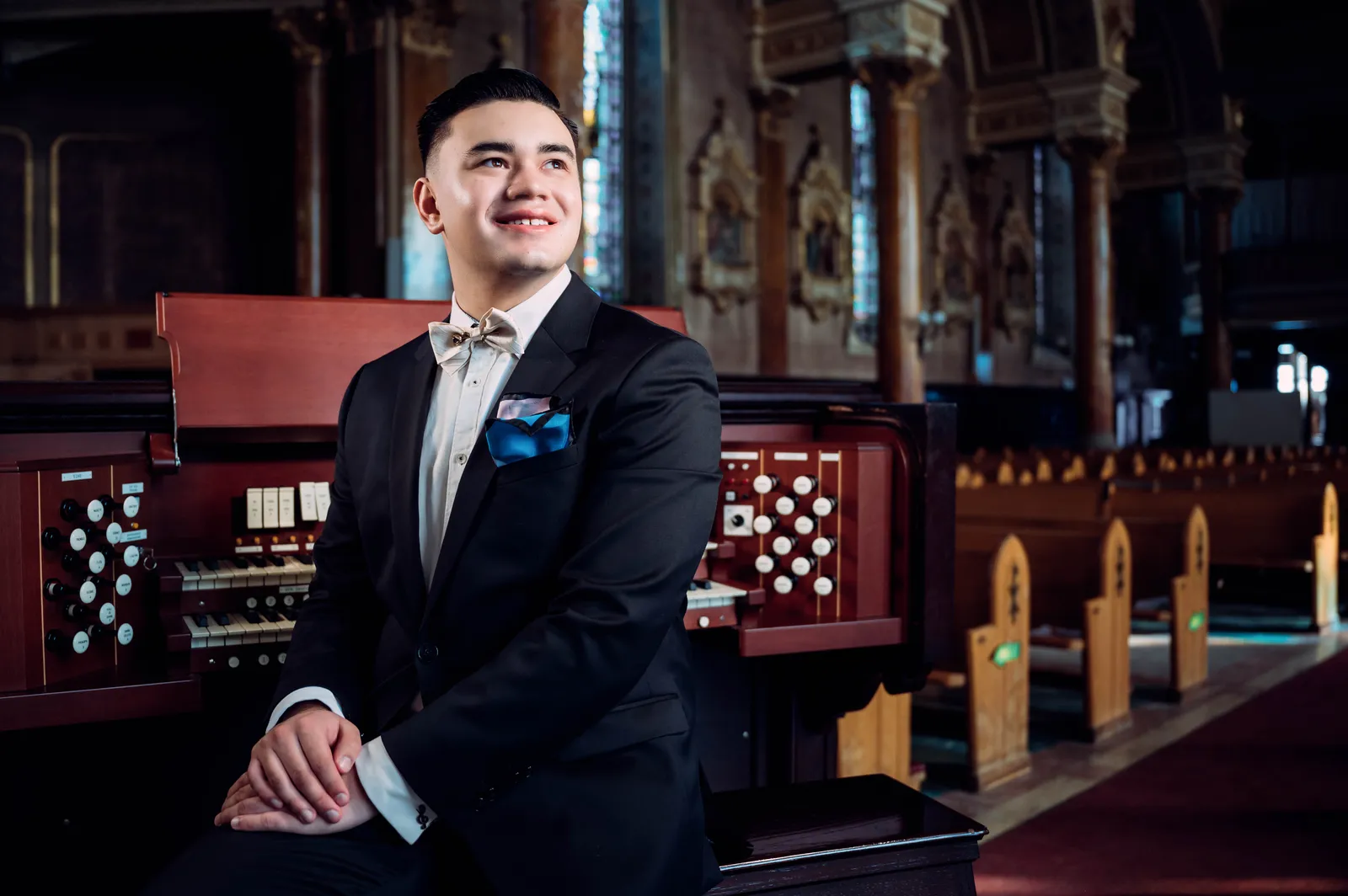
5. What can you tell us about the Miami International Organ Competition, and what do you look for in a competitor?
During my time at the Church of the Epiphany, I undertook a substantial revision of the rules governing the Miami International Organ Competition. My principal objective was to create a competition that places artistic individuality at the forefront.
I have often wondered what might happen if we gave young organists greater freedom to present themselves as the artists they genuinely aspire to be, rather than asking them to conform to a highly prescriptive repertoire framework.
I wanted competitors to have considerable artistic freedom from the moment they sat down at the console. The principal repertoire requirement is that one composition must be based on plainchant, but even within that requirement, performers have considerable flexibility. Competitors may repeat repertoire from the semifinal round in the final, and orchestral transcriptions are welcomed without a separate restriction on their duration.
My intention is to encourage performers to present programmes that genuinely reflect their musical personalities, artistic interests, and individual strengths.
Technical excellence is, of course, fundamental, but technique alone does not necessarily make a compelling artist. I want to hear imagination, conviction, originality, sensitivity, and an ability to communicate with an audience. I want to leave a performance feeling that I have encountered a distinctive musical personality.
I also believe that the value of a competition extends far beyond its official results. I once participated in a competition where, although I did not receive first prize, an audience member was particularly drawn to my playing and subsequently invited me to give a concert. That experience reinforced my belief that artistic success cannot always be measured by a jury’s decision.
Even when a competitor does not win, they may establish a meaningful connection with an audience member, a concert presenter, or someone who will follow and support their career for years to come.
I am very much looking forward to this coming February’s competition, which will offer an opportunity to see these principles realised in performance. Above all, I hope we will encounter young musicians who are not simply exceptional organists, but compelling and individual artists.
Transcriptions, and where to start
6. You’ve made a large number of orchestral transcriptions for the organ. What draws you to that work, and how do you choose what to transcribe?
My interest in orchestral transcriptions stems from a desire to explore the organ’s possibilities beyond the boundaries of its conventional repertoire and to develop a distinctive artistic identity.
Although I have an enormous appreciation for the music of Bach, Mendelssohn, Vierne, and the other great composers of the organ repertoire, I am equally interested in discovering what the instrument can offer to music that was never originally conceived for it.
Transcriptions were, in fact, among the things that first drew me to the organ. Hearing music that I already knew and loved transformed through the resources of a pipe organ was an exhilarating experience. Especially if it was done well on a good instrument. It opened my eyes to the instrument’s extraordinary potential and made me want to explore those possibilities myself.
When choosing a work to transcribe, I am particularly drawn to music with a rich orchestral palette, compelling rhythmic energy, dramatic contrasts, and opportunities for imaginative registration. The challenge is not simply to reproduce the notes of an orchestral score, but to translate its musical character into the language of the organ.
In certain instances, the organ can reveal aspects of an orchestral composition in an entirely new way. Audience members have occasionally told me that they preferred hearing Wagner’s Tannhäuser Overture on the organ to hearing it performed by an orchestra. That is a wonderful testament to the expressive power of the instrument.
Of my own transcriptions, I am particularly proud of Leonard Bernstein’s Overture to Candide. Its rhythmic complexity, brilliance, humour, and rapidly changing orchestral textures present a fascinating challenge for a single performer.
I am also increasingly interested in transcribing orchestral accompaniments for choral and collaborative works. Trinity’s magnificent Skinner provides an ideal vehicle for this, allowing the organ to assume a genuinely orchestral role in performances of larger-scale choral repertoire.
As far as original organ repertoire is concerned, my greatest affinities lie with the English and German Romantic and late-Romantic traditions, particularly the music of Howells, Elgar, Reger, and Karg-Elert. Their harmonic language, emotional depth, and sophisticated treatment of tonal colour resonate deeply with me.
Ultimately, I want my work as a transcriber and performer to expand the organ’s repertoire, challenge preconceived notions about the instrument, and make it accessible to audiences who might never otherwise consider attending an organ recital.
7. Which piece or composer would you point a newcomer to the organ toward? And is there anything you’d like readers to hear or look out for?
For someone encountering the organ for the first time, I would probably recommend beginning with an orchestral transcription, particularly a work they might already recognise.
Music from Tchaikovsky’s The Nutcracker, Bernstein’s Overture to Candide, or Mussorgsky’s Night on Bald Mountain offers a wonderful introduction to the instrument’s dramatic, orchestral, and virtuosic capabilities.
There is something tremendously exciting about watching a single performer recreate the complexity of an entire orchestra, coordinating multiple keyboards, pedals, and registration changes while bringing such vividly contrasting musical characters to life.
I think these performances can immediately challenge many of the preconceived ideas people have about the organ. Once listeners discover the instrument’s versatility through familiar music, they may become curious about its vast original repertoire and the extraordinary composers who have written for it.
I would warmly encourage readers to follow my performances on YouTube and Facebook, where I regularly share recordings of both concert repertoire and music from the Cathedral.
The upcoming Royal School of Church Music residency in January is also something I am particularly looking forward to. It will provide a wonderful opportunity to showcase Trinity’s remarkable instrument within the Anglican choral tradition and to share the musical possibilities of our Cathedral with a wider audience.
Above all, I want people to discover that the organ is not simply an instrument of the past. It is an instrument of extraordinary creative potential, capable of continually reinventing itself and communicating with new generations of listeners. I hope that my work, both as a concert artist and as a cathedral musician, contributes to that discovery.
The organ is not simply an instrument of the past. It is an instrument of extraordinary creative potential.
Closing
Thank you, Alex, for a generous conversation, and for the reminder that an organ should sound like the person at the console.
If you're in South Florida, hear him at Trinity Cathedral in Miami on Saturday, December 19, at 7:30 PM, for “Concert for Christmas.”
Find upcoming performances, repertoire, and recordings at alexanderstrausfausto.com, watch more of Alex's playing on his YouTube channel, and find his management at Seven Eight Artists.
Kindly,
Garrett John Law
Curator, Classically Minded